
-
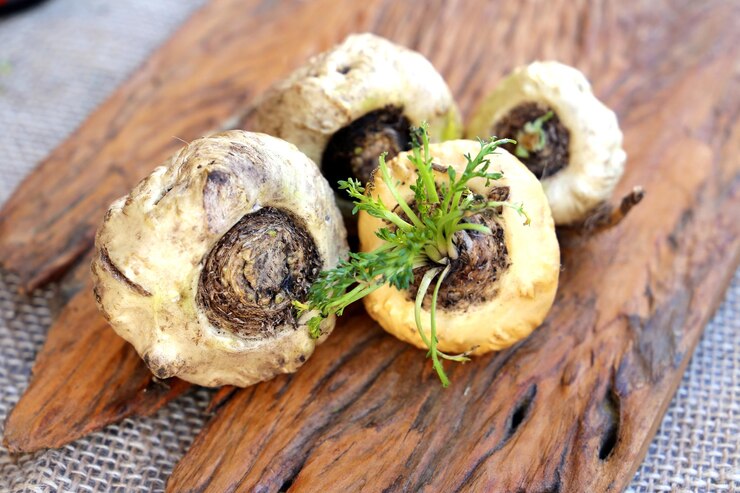
Maca Root
Botanical name: Lepidium meyenii
Origin: Andes Mountains, Peru
Traditional use since: Over 2,000 yearsMaca is a hardy root vegetable that grows at altitudes above 4,000 metres in the Peruvian Andes, one of the harshest agricultural environments on earth.
Indigenous Andean peoples, including the Inca, have cultivated and consumed Maca for centuries as a daily food and as a traditional tonic for energy, stamina, and endurance.
In Peruvian herbal tradition, Maca is regarded as an adaptogen - a plant used to help the body cope with physical and mental stress. It is also a traditional staple food in Andean cuisine.
-

Panax Ginseng
Botanical name: Panax ginseng
Origin: Korea
Traditional use since: Over 2,000 yearsPanax Ginseng is one of the most studied and most prized herbs in traditional East Asian medicine. The name Panax comes from the Greek panakeia, meaning "all-healing".
In Korean and Chinese herbal tradition, Panax Ginseng has been used for over two millennia as a tonic for vitality, endurance, and longevity. It is traditionally classed as an adaptogen.
Quality grades vary widely. The Stamina for Men formula uses Panax Ginseng (often called Korean or Asian Ginseng), distinct from American Ginseng or Siberian Ginseng, which are different plants with different traditional uses.
-

Damiana
Botanical name: Turnera diffusa
Origin: Mexico
Traditional use since: Pre-Columbian eraDamiana is a small flowering shrub native to Mexico, Central America, the Caribbean, and parts of South America. The aromatic leaves have a long history in regional herbal tradition.
The Maya, and later Spanish missionary records from the 16th century, document Damiana being prepared as a traditional herbal tea used as a vitality tonic for men.
Damiana remains a popular ingredient in traditional Mexican herbal liqueurs and herbal blends today, and is one of the four botanicals included in the Stamina for Men formula.
-

Ginkgo Biloba
Botanical name: Ginkgo biloba
Origin: China
Traditional use since: Ancient Chinese medicineGinkgo Biloba is often called a "living fossil". The species has existed for over 200 million years, making it one of the oldest tree species still alive today.
In Traditional Chinese Medicine, both the seeds and the distinctive fan-shaped leaves have been used for centuries. The leaf extract is the form used in modern herbal supplements.
Ginkgo is traditionally associated with supporting circulation and mental clarity, and remains one of the most widely consumed herbs in Europe and Asia. It is the fourth botanical in the Stamina for Men formula.


Frequently Asked Questions About Our Herbs
Common questions about the four herbs in the Stamina for Men formula.
How long does it take for Maca to work?
Maca has been used in Andean tradition as a daily food and tonic, where its effects are understood to build cumulatively over time rather than to produce an immediate result. Traditional preparation involves regular daily consumption over weeks or months. Like other plants classed as adaptogens, Maca is traditionally regarded as working with the body's natural rhythms rather than acting as a quick fix.
Are the ingredients in Stamina for Men vegan?
Yes. The four active ingredients are all plant-based herbs. The capsules themselves are vegetable capsules rather than gelatine, which makes the finished product suitable for vegans and vegetarians.
Is Maca root safe?
Maca has been consumed as a daily food by indigenous Andean people for over 2,000 years. It is generally regarded as well tolerated when taken at typical supplement amounts. As with any herbal product, anyone with a medical condition or taking prescription medication should speak with their doctor before use.
What is the difference between Panax Ginseng and other types of Ginseng?
Panax Ginseng (sometimes called Korean Ginseng or Asian Ginseng) is the species used in the Stamina for Men formula. It is distinct from American Ginseng (Panax quinquefolius) and from Siberian Ginseng (Eleutherococcus senticosus), which is not a true Ginseng at all. The three plants have different traditional uses and different active compounds.
Can you take Maca, Panax Ginseng, Damiana and Ginkgo together?
Yes. These four herbs come from different traditional medicine systems but have been combined by herbal formulators for many decades. Each herb plays a different traditional role, which is why blended formulas like Stamina for Men use all four together rather than relying on a single herb. Anyone taking prescription medication should still check with their doctor or pharmacist before starting any new herbal supplement.
What time of day should I take Stamina for Men?
Stamina for Men is taken approximately 30 to 40 minutes before intended activity, with water and ideally alongside a small meal or snack. There is no fixed time of day requirement. Some users prefer evening, others prefer earlier in the day depending on their schedule. Avoid taking late at night if you find Panax Ginseng affects your sleep, as it is traditionally associated with energy and alertness.
Now that you know what's inside, try Stamina for Men® for yourself with a sample pack.